Saturday morning in the Vale has a rhythm of its own. Boots fill with paper bags, someone is always selling coffee out of a van, and the week's growing is laid out on trestle tables in Cowbridge, Penarth, Barry, Llantwit Major and the villages in between. What turns up changes every few weeks, which is exactly the appeal. Here is how the market year runs, month by month, along with the practical things — dates, parking and the questions worth asking at the stall.
How the Vale's market year works
Most markets in the Vale are monthly, held on a Saturday morning, and the majority fall on the first or second Saturday of the month. The larger towns sometimes run a weekly or fortnightly street market alongside, and summer brings extra one-off events — food festivals, village shows, pop-up producers' rows outside a hall or a pub.
It also pays to know which sort of market you are walking into. At a proper farmers' market the person behind the table grew, reared, baked or brewed what is on it, or works directly with someone who did. Many such markets operate under rules requiring produce to be grown, reared or made within a set distance of the town, which is why the Vale's tables feel so specific to the Vale. A general street market may mix in traders selling bought-in goods alongside local producers — perfectly good shopping, but a different thing entirely.
Treat any date you see online as a guide rather than gospel. Dates move for weddings, roadworks and weather, and Christmas markets tend to land in the last week of November or the first week of December. Before you drive across the Vale, check the market's own page, the town council noticeboard or the posters in shop windows, and ring the organiser if it is a long trip.
Two timing rules hold all year: arrive in the first hour for choice, and drift in for the last half hour if you are after a bargain. The early crowd gets the asparagus; the late crowd gets whatever the grower would rather not carry home.
Spring: March to May
Spring arrives late in this part of the world, and the stalls show it. March is still a roots-and-greens month: leeks, kale, spring greens, celeriac, parsnips and stored apples, with purple sprouting broccoli making its brief, glorious appearance towards the end of the month. If you have only ever eaten the imported version, Vale-grown purple sprouting is a different vegetable — sweet, tender stems that need nothing more than a hot pan, a knob of butter and a pinch of salt.
April is the turning point. Forced rhubarb gives way to outdoor rhubarb, wild garlic appears in bundles, and the first proper salad leaves, radishes, spring onions and peppery watercress turn up. This is also the month when lamb starts to appear on the meat stalls, often from smallholders who lambed in March, and when bunches of mint, chives and parsley begin to look worth buying again.
May is the month most people wait for. Asparagus runs right through it — and it runs quickly, so ask the grower which day it was cut, because asparagus loses its sugar fast and a single day makes a difference. Alongside it come the first polytunnel strawberries, early broad beans, podded peas, new potatoes and the first of the soft herbs. May is the month to buy twice as much as you planned and eat it that evening.
Summer: June to August
Summer is the peak of the year and the tables get crowded. Soft fruit dominates: strawberries, raspberries, gooseberries, red and blackcurrants, then cherries and the first of the loganberries and tayberries. Courgettes arrive in a flood — including the flowers, which are worth buying if you spot them — along with cucumbers, beetroot, chard, French beans, mangetout and the first outdoor tomatoes.
From July the savoury side fills out. Garlic, onions, shallots, new potatoes in their papery skins, salad crops, and peppers and aubergines from the polytunnels. Sweetcorn appears at the very end of August. Herbs are at their best and cheapest now, and a large bunch of basil or coriander will cost you less than the supermarket's plastic-wrapped pinch.
Summer is also when the markets turn into events. Expect live music, a barbecue or a pizza oven, longer queues, and on the hottest mornings a quiet plea from growers to come before eleven. Bring a cool bag. Nothing ruins a good market morning like a punnet of raspberries turning to jam on the car seat.
Autumn: September to November
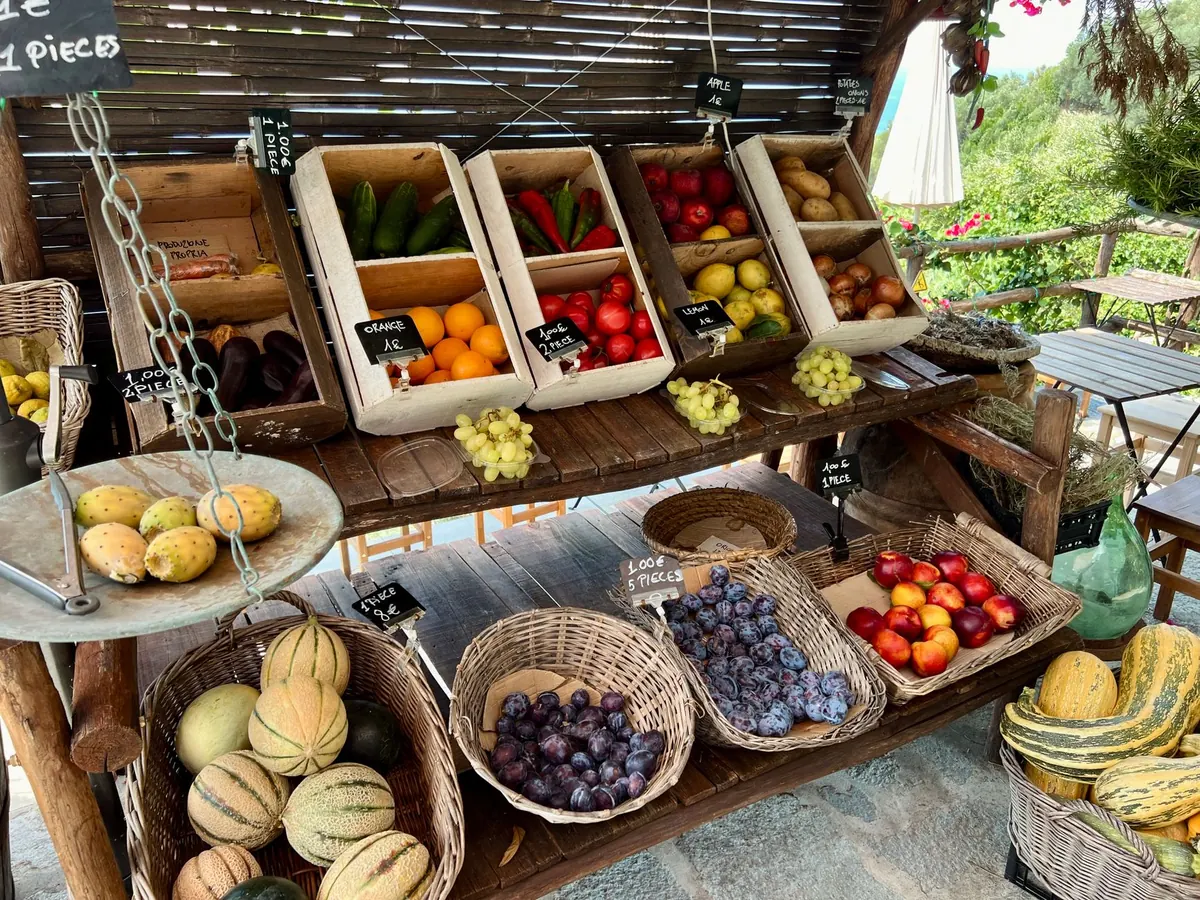
Autumn is the most generous season and, for many regulars, the best. Apples and pears come in — eaters, cookers and cider fruit — and the orchards of the Vale produce varieties you will not find in any shop. Plums and damsons run through September, with blackberries from the hedgerows and the first hazelnuts not far behind.
Squash and pumpkins take over the tables in October, alongside sweetcorn, maincrop potatoes, carrots, beetroot and the first of the winter greens. Mushrooms appear — sometimes wild, always worth asking about — and the meat stalls fill with game and with hogget.
By November the year has turned. Kale, sprouts on the stalk, parsnips, swede and celeriac are back. This is also the season of the store cupboard: chutneys, jams, honey, cider, cheese and bread. The Christmas markets land in the last week of November or the first week of December and they are worth the trip — but go early, because the parking goes first.
Winter: December to February
Winter markets are smaller and quieter, and there is something deeply satisfying about them. Expect hardy greens, leeks, parsnips, swede, celeriac, stored apples, forced rhubarb from January, and plenty of preserves and baked goods. The meat stalls come into their own: slow-cooking cuts, sausages, bacon and the sort of braising steak that supermarkets rarely bother with.
January is the thinnest month. Some producers take a break, some markets skip a date, and the stalls that do turn up are selling roots, greens and stores. Go anyway. A quiet market is a good place to talk to growers about what they are planning for the year — and they will remember you in June.
How to shop a Vale market well
- Take cash. Many stalls now take cards, but not all, and the signal in a village hall car park is never guaranteed.
- Bring your own bags — a sturdy one for the heavy stuff and a cool bag for dairy, meat and soft fruit.
- Buy the glut. When something is cheap and plentiful, buy a lot and preserve some. That is how a market habit pays for itself.
- Ask about seconds. Misshapen fruit and vegetables are often a fraction of the price and perfectly good for jam, soup or roasting.
- Order ahead. For a large joint, a whole lamb box or a Christmas bird, ring the producer in advance. Much of what is sold at these markets is pre-ordered before the stall is even set up.
Worth asking at the stall
A short conversation at the table tells you more than any label. These are the questions that get you the best of the day.
- Was this grown or made by you, and where?
- When was it picked — this week or last?
- What is at its very best right now?
- What should I do with it?
- Will you be back next month?
The best market shopping is not a list you take with you; it is a plan you make standing in front of the table.
That is really the whole guide. Learn the shape of the year, turn up early, talk to the people doing the growing, and the Vale's markets will feed you better than any supermarket aisle — and you will know exactly where it came from.
Photo: tamira kanemägi / Pexels